
Your Cart is Empty


August 14, 2026 5 min read 1 Comment
Key takeaway: A horse’s digestive tract is one continuous tube, but nutritionally it functions as two distinct systems. The foregut (stomach + small intestine) digests protein, fat, and simple carbohydrates with acid and enzymes. The hindgut (cecum + large colon) is a massive fermentation chamber that turns fiber into usable energy. Horses were designed to get most of their energy from the hindgut. Feeding in a way that respects this biology reduces ulcer risk, protects hindgut health, and supports better performance.
Understanding the difference between these two systems changes how you think about every bag of feed you open.
Anatomically, the equine digestive tract runs from mouth to manure pile as one long tube. Nutritionally, however, it is far more useful to think of the horse as having two very different digestive systems working in sequence.
1. The foregut — stomach and small intestine. Digestion here relies primarily on acid and enzymes, similar to how humans, dogs, and cats digest food.
2. The hindgut — cecum and large colon. This is a large fermentation chamber powered by billions of microorganisms. Horses live in a true symbiotic relationship with these microbes (often called the hindgut microbiome or “probiotics”).
Horses evolved over roughly 50 million years as hindgut fermenters. Domestication is only about 5,000 years old. In that short time we have asked horses for dramatically higher athletic performance, yet their digestive anatomy has not changed to handle large loads of starch the way other athletic species do. The good news is that horses can still deliver excellent performance when we supply energy primarily from fermentable fiber and healthy fats — the fuels their hindgut was built to use.
The foregut includes the stomach and small intestine. Food enters the stomach, where acid begins the digestive process, then moves into the small intestine where enzymes break down protein, fat, vitamins, and simple carbohydrates so they can be absorbed.
The horse’s stomach is surprisingly small relative to body size. This design works well for continuous grazing of forage, but it creates problems when we feed large, starch-heavy meals. If more starch arrives in the small intestine than can be fully digested there, the excess continues into the hindgut — where it was never meant to go.
Key point: The small intestine is the proper site for starch digestion. No significant amount of starch should escape the foregut.
The cecum and large colon form an enormous fermentation chamber. Instead of relying on the horse’s own enzymes, this system depends on a complex community of bacteria and other microorganisms. The horse supplies fiber; the microbes ferment it and produce volatile fatty acids (VFAs). The horse absorbs those VFAs and uses them as a major energy source.
Fiber is not just “roughage” that keeps things moving. Fiber is fuel.
That distinction is especially important for performance horses. A well-functioning hindgut supplies steady, cool energy, supports microbial balance, and helps maintain hydration and manure consistency.
When you feed the right fiber, you are also feeding the microorganisms that live inside your horse. Different fibers support different microbial populations. The quality and fermentability of that fiber determine how efficiently the hindgut works.
Highly fermentable (soluble) fibers such as those found in almond hulls and beet pulp provide excellent substrate for beneficial microbes. These “super fibers” support healthy fermentation, stable hindgut pH, and efficient energy extraction — something very different from simply filling the digestive tract with any available roughage.
This is one reason modern forage-based feeding programs often include almond hulls and beet pulp alongside traditional forages.
Starch itself is not automatically harmful. The issue is quantity, rate of intake, and — most importantly — where it is digested.
When excessive starch escapes the small intestine and reaches the hindgut, certain bacteria ferment it rapidly. This can:
This is why progressive equine nutrition has shifted from asking only “How much protein or starch is in this feed?” to the more important question: “Where will this feed be digested?”
The large intestine holds a substantial fluid reservoir associated with its fibrous contents. This reservoir becomes especially important during exercise, transport, heat stress, or any situation that challenges water balance.
A healthy hindgut therefore supports more than manure consistency. It is linked to fiber utilization, microbial stability, energy production, and hydration — all foundational for the performance horse.
Modern horses live in stalls, travel in trailers, and compete in arenas, but their digestive anatomy has not been redesigned to match our schedules. They remain hindgut fermenters.
This does not mean every horse needs the identical diet, or that concentrates never have a place. Nutritional needs vary with age, workload, body condition, metabolism, forage quality, and health status. It does mean we should respect the basic biology of the animal.
The practical approach is forage-based feeding: start with the digestive system the horse was designed to use and build the rest of the program from there.
At Cowboy’s Choice we design feeds around this principle. Both of our primary products are built on fermentable fiber rather than traditional grain.
A low-starch, low-sugar complete feed and true hay-replacement option. It combines alfalfa, almond hulls, beet pulp, and rice bran with balanced vitamins and minerals.
Especially useful for:
A forage-based conditioning and performance feed. It combines almond hulls, beet pulp, and rice bran to deliver energy from fermentable fiber and fat rather than relying primarily on traditional grain.
Designed for horses that need additional calories, improved body condition, and steady performance energy while staying on a forage-first foundation.
Different horses have different nutritional requirements, but they all share the same basic digestive anatomy. Once you understand that your horse essentially has two digestive systems, the most important question is no longer simply “What am I feeding?” It becomes “Where and how will this feed be digested?”
That question is the foundation of feeding horses the way they were designed to digest.
Ready to feed the way horses were designed?
Find a local dealer near you.
Comments will be approved before showing up.
Sign up to get the latest on sales, new releases and more …
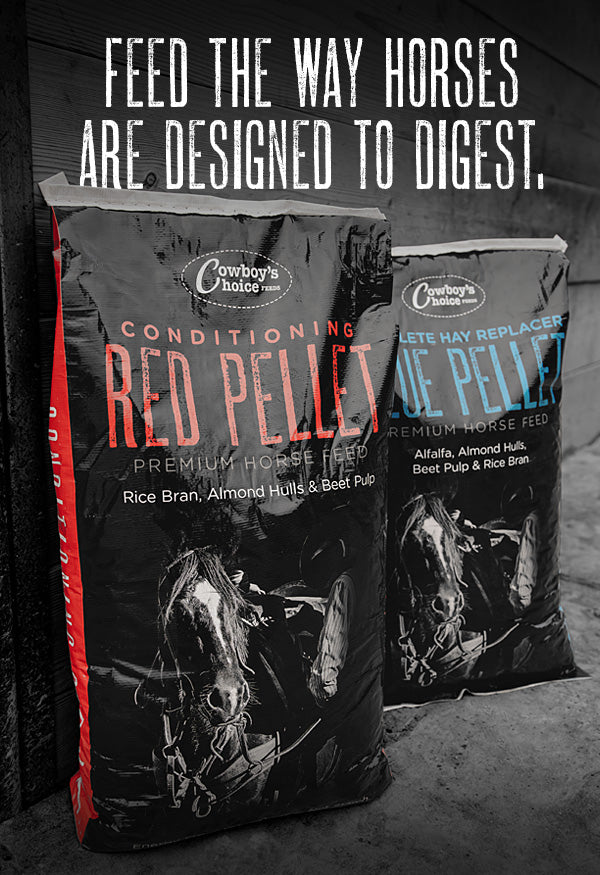
Cowboy’s Choice Premium Horse Feed makes nutrition simpler with a low-starch, fat- and fiber-driven formula designed around the way horses naturally digest. Our forage-based feeding system supports efficient digestion and a balanced hindgut, helping horses get more from their feed while supporting gut health, muscle development, and steady, cool energy for performance—without unnecessary stress on the digestive system.
Give your horse the nutrition nature intended—find your Cowboy’s Choice dealer today.

Ingrid
September 01, 2026
Interesting article.