
Digestive Physiology, Metabolic Safety & Modern Fiber-Based Feeding
A Veterinary Overview of Cowboy’s Choice Fiber-Based Feeds
Cowboy’s Choice Feeds were developed to address a central issue in equine medicine: a substantial portion of gastrointestinal and metabolic pathology is driven by feed composition rather than management factors alone.
Contemporary feeding programs frequently rely on starch-dense concentrates that can exceed the digestive capacity of the equine small intestine. When undigested starch reaches the hindgut, rapid fermentation and pH decline may contribute to dysbiosis and increased risk for colic and laminitis. Fiber behaves differently.
At-a-Glance Clinical Relevance
A fiber-first feeding strategy may be particularly beneficial for horses with insulin dysregulation or metabolic conditions such as PPID and EMS, as well as those at risk for laminitis. It can also support horses with gastric ulcer concerns related to high-starch meal patterns, those prone to hindgut dysbiosis or fecal water syndrome, senior horses with dental limitations and reduced forage tolerance, and performance horses where “hot” grain-based energy is undesirable.
Digestive Physiology
The equine small intestine has a limited enzymatic capacity for starch digestion. When excessive starch escapes small-intestinal digestion and reaches the hindgut, rapid microbial fermentation can occur, increasing the likelihood of hindgut acidosis and microbial dysbiosis, gas production and associated motility disturbances, fecal water syndrome in susceptible horses, and a greater risk of colic or laminitis in at-risk individuals.
Fiber-based feeds behave differently. Structural and soluble fibers are fermented more gradually and predictably in the hindgut, producing volatile fatty acids (VFAs) that provide a steady energy supply without the same post-prandial glycemic or insulinemic response typically associated with grain.
Feed classification (clinical use):
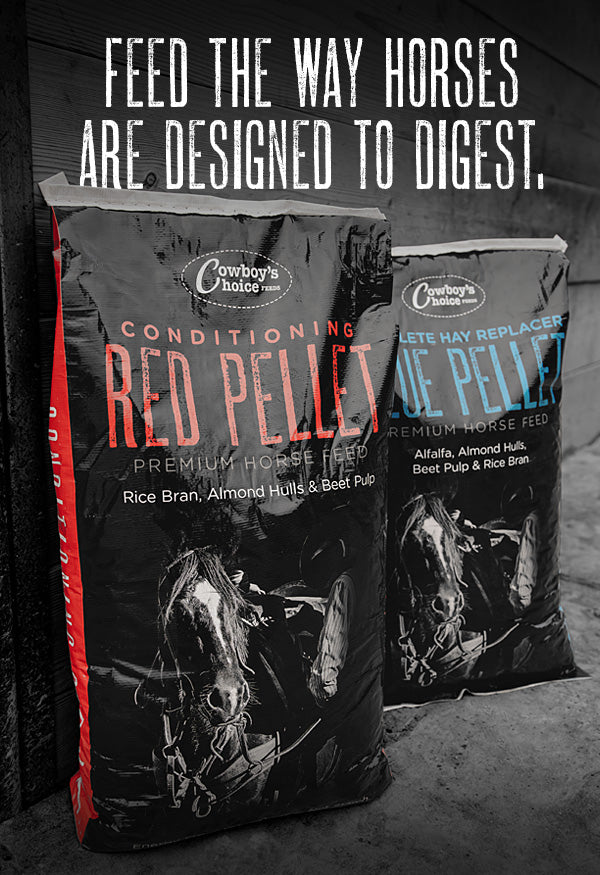
Cowboy Complete (Blue Bag): low-starch, fiber-based complete feed designed to function as a hay replacer.
2. Cowboy Red Pellets (Red Bag): fiber- and fat-based conditioning supplement intended to complement forage.
Both products are grain-free and soy-free; primary caloric sources are soluble fiber and fat rather than starch.
Metabolic Considerations
In horses with insulin dysregulation, PPID, or laminitis risk, glycemic load and insulin dynamics matter. Cowboy Complete contains 1-4 percent starch and total NSC around 11 percent.


Almond Hulls and Insulin Response
Veterinary Technical Brief
Figure reference: Serum insulin response following a meal containing different ingredients (0.15 percent BW), fed at 0 minutes. Data demonstrate that almond
hulls produced a substantially lower postprandial insulin response compared with steam-crimped oats, and a response pattern closer to forage. Hansen, T.L. et al. (2020)
Clinical interpretation:
1. Almond hulls demonstrated a low postprandial insulinemic response comparable to Orchard hay.
2. This supports the use of almond-hull-based soluble fiber as part of a metabolic risk-reduction feeding strategy.
3. Individual responses may vary depending on the horse, total ration composition, metabolic status, and comorbidities.
4. Veterinary oversight remains recommended for horses with advanced metabolic disease.
Bioactive Components and Hindgut Support
Beyond digestible fiber, almond hulls contain naturally occurring polyphenols and antioxidant compounds supporting:
1. Microbial stability through prebiotic substrate effects
2. Reduced oxidative stress associated with performance and aging
3. A fiber-first feeding strategy that aligns with hindgut physiology
Additional ingredient roles:
1. Beet pulp: digestible fiber with low starch and a low glycemic index profile supporting controlled fermentation.
2. Rice bran: digestible fat source supporting caloric density and coat condition.
3. Alfalfa in Cowboy Complete: Low starch protein and calcium contribution supporting ration balance.
Clarification of the Five-Pound Per Feeding Rule
The recommendation to limit meals to approximately five pounds per feeding applies primarily to high-starch concentrates due to limitations of small intestinal starch digestion.
Fiber-based feeds behave differently:
1. Fiber fermentation occurs primarily in the hindgut.
2. Fiber does not produce rapid lactic acid accumulation.
3. Fiber does not trigger the same glycemic spikes as grain.
Applying a strict five-pound limit to fiber feeds would contradict typical forage intake patterns, where a single hay flake may exceed six to ten pounds.
Pellet Structure and Choke Considerations
Cowboy’s Choice pellets are compressed fiber pellets made without chemical binders and are not formulated to rapidly swell in gastric fluids. As with any feed, the primary factors associated with choke risk are rapid feed intake, dental disease, inadequate hydration, and poor mastication. For horses with known risk factors, soaking the pellets may be advisable to support safer consumption.
For veterinarians who would like a deeper look at the formulation and supporting research, a downloadable technical brief is available. The document provides an executive summary, an overview of digestive physiology, detailed nutrient analysis tables, a summary of the literature on almond hulls, and a full list of scientific references.
Professional Dialogue
Our work focuses on digestive physiology, metabolic safety, and feed formulation strategies aligned with veterinary understanding of equine nutrition.
Veterinarians managing complex metabolic, gastrointestinal, or geriatric cases are welcome to reach out for further discussion.
Contact: Dr. Gabriele Gross, DVM, PhD, Equine Nutrition Consultant, DrGross@MaverickLivestockSupply.com
1. Clutter, S.H. and Rodiek, A.V. (1992). Feeding value of diets containing almond hulls. Journal of Equine Veterinary Science.
2. Hansen, T.L. et al. (2020). Postprandial blood glucose and insulin responses of horses to feeds differing in soluble fiber concentration. Journal of Equine Veterinary Science.
3. National Research Council (2007). Nutrient Requirements of Horses. National Academies Press.
4. Freeman, D. (2023). Equine Nutrition and Hindgut Health. Oklahoma State University Extension.
5. Van Vliet, S. (2025): “Nutritional and antioxidant values in almond hulls.” Utah State University, Food Metabolomics Lab