
Your Cart is Empty


July 13, 2026 4 min read
Walk through any feed store and you'll quickly notice a common theme. Many feeds designed for performance horses promise more energy through more grain. For decades, grain has been viewed as the obvious solution for horses that need to work harder. The common belief is, if a horse needs more speed, stamina, or body condition, simply feed more grain. But this is not how the horse was designed to produce energy. Performance begins differently in the digestive tract. Therefore, horses need to be fed the way they are designed to digest.
Horses evolved over millions of years grazing almost continuously on grasses and other fibrous plants. Their digestive system is remarkably efficient at converting fiber into energy. The true powerhouse is the hindgut, where billions of beneficial micro-organisms ferment plant fiber and produce volatile fatty acids. These fatty acids supply most of the horse's daily energy requirements and provide a slow, steady source of fuel for work.
This natural fermentation process is one of the reasons horses can travel long distances and perform for hours without relying on large amounts of grain.
Grain certainly has its place, especially when calorie demands become extremely high. The problem arises when grain becomes the primary source of energy. The horse's small intestine can digest only a limited amount of starch at one time. When more starch is fed than can be digested, the excess passes into the hindgut. That is where problems begin. Instead of supporting the beneficial fiber-fermenting microbes, excess starch can disrupt the microbial population. As a result, fiber digestion may become less efficient, reducing the horse's ability to harvest energy from forage. Ironically, a horse may consume more calories while producing less usable energy.
Every horse is an individual, and grain certainly has its place in some feeding programs. The question isn't whether grain is good or bad. The real question is whether your horse is receiving more starch than its digestive system can comfortably handle. Here are five clues that it may be time to take a closer look at the feed bucket.
How can I help my horse produce more usable energy from the feed I'm already providing?
That simple shift in thinking often changes the entire feeding program.
Performance nutrition should support the way horses naturally digest feed. Forage provides the fiber that fuels the hindgut microbes. Healthy microbial fermentation produces a steady stream of energy throughout the day. This is very different from the rapid rise and fall that can occur when large starch meals dominate the diet.
For many performance horses, supporting digestive efficiency is just as important as meeting calorie requirements. A horse that digests well is often a horse that performs well.
At Cowboy's Choice Feeds, we believe nutrition should work with the horse's natural biology. Take starch and sugar out of the diet and replace it with highly soluble fiber and healthy fats.
Cowboy Red Conditioning Pellets are a forage-based conditioning feed designed for horses that need additional calories while maintaining a moderate starch level. Built around highly digestible fiber ingredients such as almond hulls, beet pulp, and rice bran, Cowboy Red helps support body condition and sustained performance energy without relying on large grain meals.
Cowboy Complete is a low-starch, forage-based complete feed and hay replacer that provides balanced nutrition in one simple ration. It is an excellent choice for senior horses, horses with metabolic concerns, poor dentition, respiratory challenges, or owners looking to simplify feeding while continuing to support digestive health.
Both feeds are built on the same philosophy: feed the horse the way nature designed it to digest. When digestion improves, the horse can make better use of the nutrients it already receives. In many cases, that becomes the foundation for healthier horses, more consistent performance, and years of enjoyable riding.
To find a feed store near you, use our store locator.
Comments will be approved before showing up.
Sign up to get the latest on sales, new releases and more …
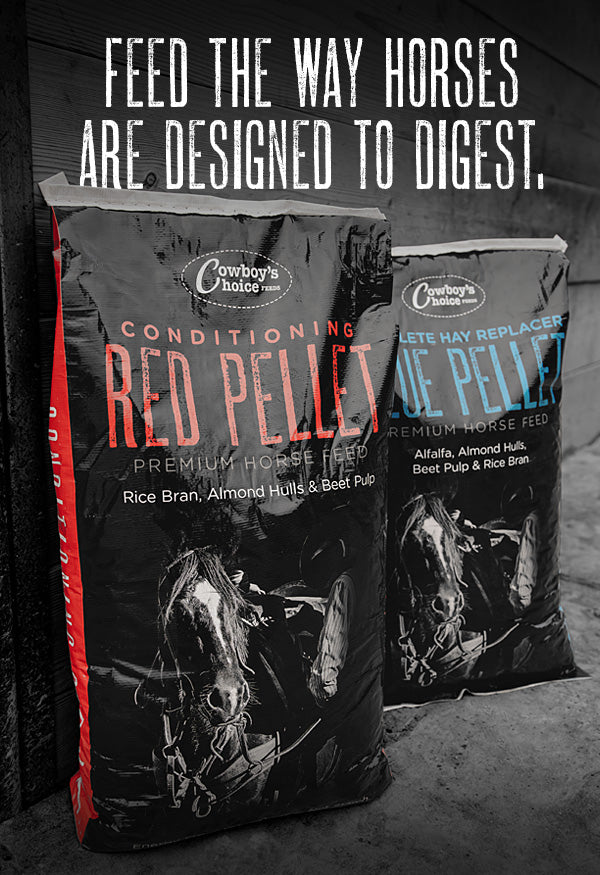
Feed the way horses are designed to digest.
Cowboy’s Choice Premium Horse Feed is a low-starch, fat- and fiber-driven approach that simplifies nutrition while promoting gut health, muscle development, and performance. Built on a forage-based feeding system, it supports digestive efficiency and whole-horse health with easy-to-digest fiber that lightens the load on the gut.
