Your Cart is Empty




Horse owners talk constantly about protein, calories, ulcers, topline, or joint support. But one of the most overlooked nutritional problems in modern horses may actually be a mineral imbalance hidden deep inside the forage itself: excess iron and relative copper deficiency.
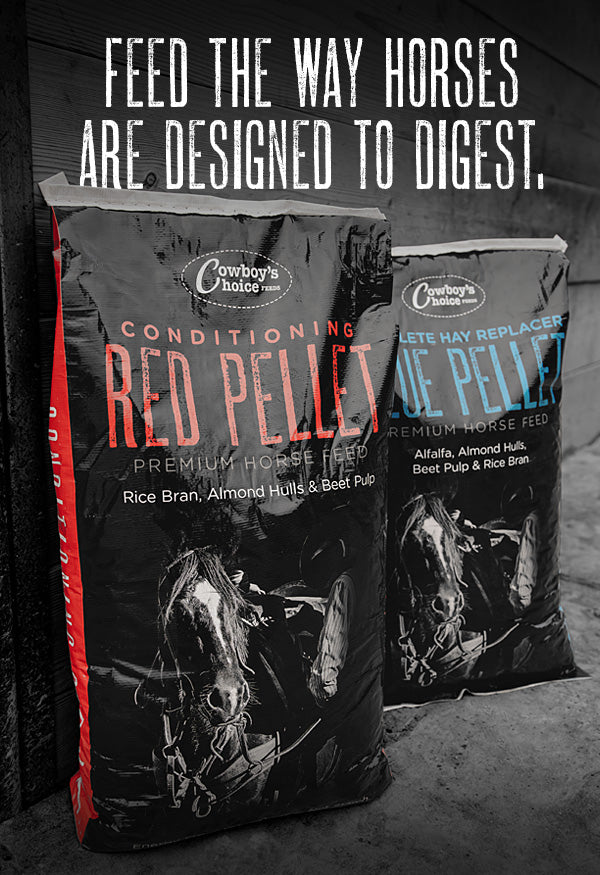
At Cowboy’s Choice Feeds, both Cowboy Complete and Cowboy Red Pellets are fortified with 90 ppm copper, equivalent to approximately 41 mg of copper per pound of feed.
Why does this matter? Because modern horses are no longer eating forage grown in the same soil conditions that existed decades ago.
1. The soil has changed — and so have the minerals
Over the last several decades, many agricultural regions have experienced increasing soil acidification. Lower soil pH changes mineral availability inside plants. One major consequence is increased iron uptake into forage crops and hay. The problem is not simply “too little copper.” The larger issue is often too much iron competing against copper absorption inside the horse’s body.
Iron and copper are antagonistic minerals. Excess iron can interfere with copper utilization at the cellular level. A horse may technically consume copper, yet still functionally behave as if copper deficient because iron blocks proper absorption and balance.
This creates what many nutritionists refer to as a “relative copper deficiency”.
In practical terms, horses may be overloaded with iron while simultaneously struggling to maintain healthy copper status.
2. Why older Copper recommendations may no longer be enough
The National Research Council (NRC) established baseline copper recommendations many years ago. Those values were developed under very different environmental and forage conditions. Today, many horses consume hay grown on iron-rich or increasingly acidic soils. In those situations, minimum copper recommendations may not adequately compensate for mineral antagonism caused by excess iron exposure.
In the field, many experienced equine nutritionists now observe that horses often perform better at substantially higher copper intake levels than traditional minimum recommendations.
Depending on geography, forage source, water source, workload, and individual metabolism, many horses may require approximately 300–700 mg of copper daily to properly balance elevated iron exposure.
This is especially relevant in areas with:
1. High-iron well water
2. Acidic soils
3. Heavy fertilization
4. Coastal or mineral-depleted forage regions
5. Long-term hay-only feeding programs
3. Copper is about much more than coat color
Copper is involved in connective tissue integrity, hoof quality, antioxidant defense systems, blood vessel stability, collagen formation, immune function, and energy metabolism.
When copper status becomes compromised, the effects can appear almost anywhere in the horse’s body.
Possible signs associated with copper imbalance may include:
1. Weak or brittle hooves
2. White line problems
3. Increased abscesses
4. Tendon or ligament weakness
5. Poor topline development
6. Dull or sun-faded coats
7. Delayed recovery from exercise
8. Joint stress in growing horses
9. Reduced resilience under performance demands
Copper also plays an important role in collagen and elastin formation — critical structural proteins for connective tissues throughout the body.
This is one reason why modern hoof and performance nutrition programs increasingly focus on balancing copper together with zinc. Bloodwork often does not tell the full mineral story. A hair mineral analysis can sometimes provide additional insight into long-term cellular mineral patterns, particularly iron and copper relationships within tissues. When interpreted correctly alongside forage analysis, feeding history, regional soil conditions, and clinical signs, hair mineral analysis may help identify hidden imbalances contributing to chronic “mystery problems.”
Many horse owners spend years chasing symptoms:
1. Hoof issues
2. Chronic inflammation
3. Poor recovery
4. Metabolic stress
5. Weak topline
6. Coat problems
7. Recurrent soft tissue strain
Sometimes the root cause is not another supplement. Sometimes the foundation itself is out of balance.
4. How Cowboy’s Choice approaches the problem
At Cowboy’s Choice Feeds, we designed our feeds around a more modern view of equine digestive and metabolic health.
Both Cowboy Complete and Cowboy Red Pellets provide:
1. Added copper at 90 ppm (41 mg/lb)
2. Added zinc for mineral balance
3. Grain-free, soy-free formulations
4. Almond hull superfiber for improved digestibility
5. Natural antioxidant support from almond hulls
6. Lower digestive burden on the hindgut
Cowboy Complete was formulated as a low-starch hay replacer or hay extender for horses needing maximum digestive and metabolic support. Cowboy Red Pellets provide conditioning calories and sustained energy from fiber and fat while remaining gentler on the digestive tract than traditional grain-heavy feeds.
Our philosophy remains simple: You cannot fully fix a horse on top of a poor nutritional foundation. The goal is not merely to add supplements after problems appear. The goal is to improve the feeding foundation itself.
5. The Bigger Picture
Modern horse nutrition is evolving. More horse owners are beginning to realize that many chronic performance, hoof, metabolic, and connective tissue issues may have deeper nutritional roots than previously understood.
Copper is not a “magic bullet.” But ignoring copper — especially in the presence of excess environmental iron — may leave a major gap in the modern feeding program.
At Cowboy’s Choice Feeds, we believe nutrition should address root causes, not just symptoms. Because healthier horses are built from the inside out.